
Chilled Mirror Gas Turbine Application

Case Studies
|
19.05.2025
|
Axis Solutions Limited

How integrated analytics and field engineering are reshaping process optimization across India’s energy sector – sneak peek in design challenges of chilled mirror moisture application measurement in gas turbines.

about

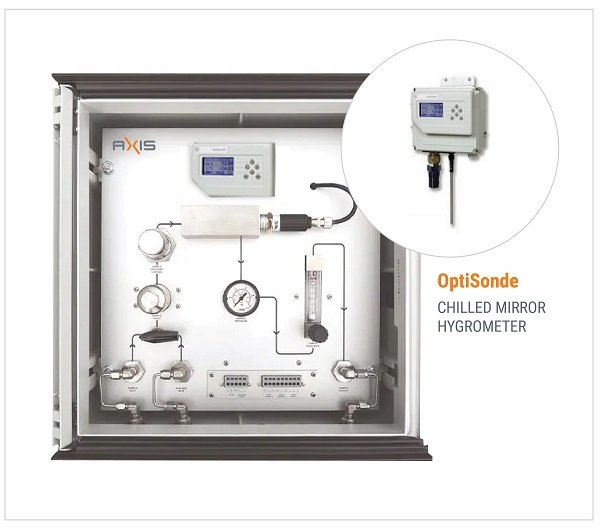
An OptiSonde chilled mirror hygrometer from M/s Panametrics (Baker Hughes company), coupled with a sampling system from Axis Solutions Limited, is used to measure humidity and temperature in various applications. The OptiSonde model is a sensor that uses a chilled mirror to determine dew point and humidity, while a sampling system is used to condition the sample gas before it reaches the sensor.

The design of sampling systems for chilled mirror moisture measurement in gas turbines presents several challenges, primarily related to ensuring accurate and reliable moisture measurements in the presence of high temperatures, pressures, and potential contaminants. These challenges include minimizing lag time, preventing condensation within the sampling line, ensuring material compatibility, and managing potential interference from other components in the gas turbine. 

Specific Challenges and Considerations:

  • High Temperatures and Pressures: Gas turbines operate at high temperatures and pressures, which can affect the accuracy of moisture measurements. Sampling systems need to be designed to handle these conditions without compromising the integrity of the sample or the measurement process. 
  • Contamination: Gas turbine exhaust can contain contaminants like particulates, corrosive gases, and other impurities that can interfere with the chilled mirror measurement. The sampling system needs to be designed to minimize the impact of these contaminants. 
  • Material Compatibility: The materials used in the sampling system must be compatible with the gas turbine exhaust and the operating environment to prevent corrosion or other material degradation. 
  • Condensation in Sampling Line: Cooling the gas stream in the sampling line to measure moisture can lead to condensation within the line, which can interfere with the measurement and potentially damage the system. Preventing condensation or minimizing its impact is crucial. 
  • Lag Time: A slow response time in the sampling system can result in inaccurate measurements, as it takes time for the sample to reach the chilled mirror and for the mirror temperature to stabilize. Reducing lag time is important for real-time monitoring. 
  • Integration with Gas Turbine System: The sampling system must be designed to seamlessly integrate with the gas turbine system without interfering with its operation or performance. This involves automation expertise to interface right protocols of analyser with PLC/DCS system.
  • Calibration and Maintenance: Moisture measurement systems, like chilled mirror hygrometers, require regular calibration to ensure accuracy. The sampling system needs to be designed to facilitate easy access for maintenance and calibration. 

Addressing the Challenges:

  • Sample Conditioning: Proper sample conditioning techniques, such as reducing pressure and/or temperature, can help minimize condensation and ensure a stable sample for measurement. 
  • Material Selection: Using materials that are resistant to corrosion and degradation in the gas turbine exhaust is crucial. 
  • Sampling Line Design: Designing the sampling line to minimize surface area and reduce the risk of condensation is important. 
  • Flow Control: Precise control of the sample flow rate can help minimize lag time and ensure a stable sample. 
  • Software Integration: Integrating the sampling system with a software platform can provide real-time data monitoring and analysis. 
  • Regular Maintenance: Regular maintenance and calibration of the sampling system and the chilled mirror hygrometer are essential for accurate and reliable measurements. A local system integrator must be employed for such service.
👍 0