The Jal Jeevan Mission (JJM), a flagship initiative by the Government of India, aims to provide safe and sustainable drinking water to every rural household by 2047. A major challenge in achieving this goal is ensuring consistent water quality, particularly by controlling turbidity caused by suspended solids such as clay, silt, organic matter, and microorganisms, which hampers treatment efficiency and bacterial disinfection. To address this, real-time turbidity monitoring was introduced through the deployment of advanced turbidity analyzers at key points in the water treatment and distribution network. These analyzers enabled continuous monitoring, timely interventions, and improved visibility of water quality data. As a result, treatment processes became more efficient, contamination risks were minimized, and compliance with safety standards was ensured, significantly contributing to the mission’s objective of delivering safe drinking water to rural households.
Operating under the Jal Jeevan Mission, a rural water supply initiative by the Government of India, the project aimed to provide safe drinking water to remote villages. However, a major challenge was the high turbidity in raw water sources such as rivers, lakes, and borewells, which contain significant levels of suspended particles. This turbidity affected the efficiency of the filtration and disinfection processes. Compounding the issue, traditional monitoring methods relied heavily on manual sampling and laboratory analysis, leading to time delays in contamination detection and response.
To meet the BIS 10500:2012 drinking water standards—requiring turbidity to be below 5 NTU there was a critical need for real-time monitoring and data-driven decision-making. This called for the implementation of automated systems and IoT-based data integration to enable rapid, informed corrective actions. The technology deployed needed to be robust, scalable, and capable of operating in decentralized rural environments while ensuring continuous compliance with regulatory norms.
To address the turbidity-related challenges in rural water supply systems, Axis Solutions proposed a comprehensive and automated solution using its advanced online turbidity analyzers. These analyzers were strategically deployed across critical points of the water infrastructure, including Raw Water Intake Points, Water Treatment Plants (monitoring both pre- and post-filtration), and Distribution Networks to ensure end-to-end water quality monitoring. The technology stack involved robust optical sensing instruments integrated with IoT-based data acquisition and remote monitoring capabilities, enabling real-time analysis and alerts. The system architecture was designed for decentralized implementation with centralized data visualization, ensuring seamless flow from sensor input to actionable insights. Customizations were made to adapt the analyzers for varying environmental and installation conditions in rural areas, including solar-powered options and rugged enclosures for remote deployment. These innovations allowed for reliable performance, timely detection of turbidity spikes, and compliance with regulatory standards, significantly enhancing the water quality management process under the Jal Jeevan Mission.
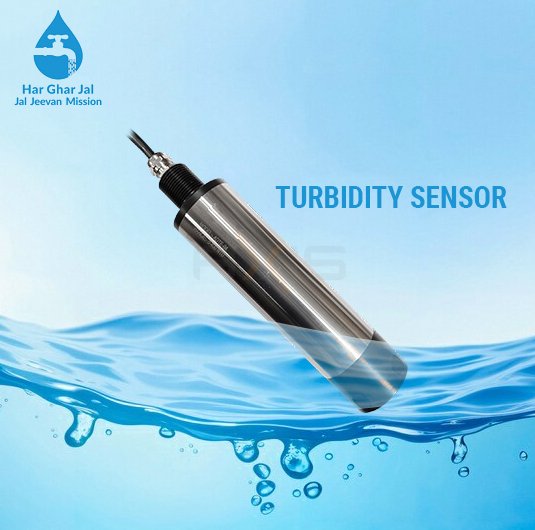
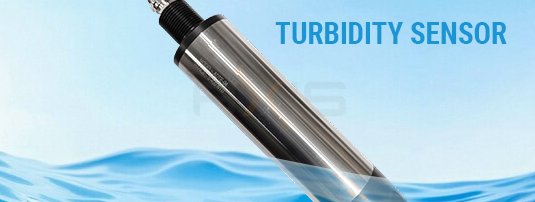
Axis Solutions’ turbidity analyzers utilize nephelometric sensor technology, which operates by measuring the intensity of light scattered at a 90 to 180 degree angle from an infrared light source. This method is in accordance with ISO 7027-1:2016 standard that specifies quantitative methods for determining water turbidity, with Nephelometric Turbidity Units (NTU) being a common unit for measuring turbidity, especially for low turbidity waters like drinking water. These sensors are suitable for continuous turbidity monitoring in water treatment plants, raw water intake points, and distribution systems. Some models include features such as automatic cleaning and digital signal output for integration with control systems.
The implementation began with a detailed site assessment and planning phase, where water sources and treatment plants with high turbidity issues were identified. Strategic installation points were selected based on water flow patterns, accessibility, and impact potential. Axis Solutions then provided advanced optical turbidity analyzers equipped with digital data transmission and automatic self-cleaning features to prevent biofouling and reduce maintenance needs. These analyzers were installed at critical locations, including raw water intake points, filtration units, and distribution outlets. They were seamlessly integrated into the existing SCADA systems, enabling real-time data collection, centralized monitoring, and automated alerts. Following installation, local water department personnel underwent thorough training in sensor maintenance, calibration, and troubleshooting, while routine calibration schedules were established to ensure measurement accuracy. The deployment process, including assessment, delivery, installation, integration, and training, was typically completed within 4 to 6 weeks per site cluster. To mitigate risks, self-cleaning sensors were used to minimize downtime, backup equipment was provided for key locations, and standard operating procedures were put in place, along with remote technical support, ensuring system resilience and continuous operation.
During execution, site-specific calibration inconsistencies were observed due to variations in raw water composition. These were resolved by implementing routine on-site calibration and adjusting analyzer settings based on actual sample characteristics. SCADA integration required additional configuration support to ensure proper data communication between the analyzers and existing systems. Power fluctuations at a few remote sites caused intermittent analyzer downtime; this was managed by providing stabilized power supply connections. These issues led to procedural updates, including a standardized calibration checklist and pre-deployment SCADA compatibility checks.

The integration of Axis Solutions’ turbidity analyzers under the Jal Jeevan Mission significantly transformed water quality monitoring practices in rural India. By replacing manual sampling methods with real-time, automated turbidity sensors, the project ensured continuous surveillance and rapid response to water quality fluctuations. This technological advancement played a vital role in maintaining turbidity levels below 5 NTU (Nephelometric Turbidity Unit), thereby delivering safe and clean drinking water to rural communities. Beyond technical success, the deployment supported the broader goal of the Government of India’s ‘Har Ghar Jal’ (Water for Every Home) initiative—contributing directly to improved public health, regulatory compliance, and sustainable water management practices. Axis Solutions’ role in this initiative showcases the impact of smart Analyzer and Instrumentation in nation-building efforts.